By: Kristina Kuhaupt, Customer Experience Manager

Did you know that May is Food Allergy Awareness Month? It is reported that approximately 33 million Americans live with food allergies, and 1 in 13 children have to navigate life-threatening food allergies. This is not a small number, and either you or someone you know may have this condition. If you have a food allergy, or think you might, talk to your doctor on how to properly manage it for you personally. Even if no one in your household has a food allergy, it is extremely important that you know what food you can and can’t serve when hosting parties, work events, or guests at your home. Even preparing or serving food containing one or more allergens in the same area as allergen-free food could cause cross-contamination and potentially an allergic reaction episode.
Lily Varilla from Group Health Cooperative has written this month’s feature article about food allergens, and she’ll cover what they are, risk factors, allergic reactions, and some considerations for those who have one or more food allergies, or who are serving food to someone who does. I’ll be focusing on the most common allergens at the Co-op and some substitutions you may want to try.
At your Co-op, any deli or hot bar prepared foods list all allergens on our ingredient stickers. Please be sure to check out those labels before gifting food or consuming it yourself. Additionally, all of our classes list allergens that one could encounter in that particular class. When signing up for a class, we ask if there are any accommodations we can potentially consider if you are interested in joining us. Not all requests can be fulfilled, but if we can make it happen, we will!
We suggest checking with a healthcare practitioner before making changes to your diet or taking supplements.
9 most common allergens are:
Milk: This is not the same as being lactose intolerant. Being lactose intolerant is when you don’t have the proper enzymes to break down lactose. Tends to be common in young children, but even more common in adults; however, milk that is baked in recipes usually does not trigger an allergic reaction. Although not every child outgrows this allergy, there is a possibility of that occurring. Substitutions: rice, oat, hemp, or pea milk, or tree nut milks such as almond, cashew, or coconut. Cheese substitutes: soy- or tree nut-based cheeses, a full replacement with sweet potato, potato, nutritional yeast, or avocado. Butter substitutes: soy, vegetable oil or ground tree nut butters, or full replacements with pumpkin puree, vegetable shortening, avocado, or apple sauce.
Eggs: This affects less than 2% of kids under six and is much less common in adults, with most kids growing out of it. Substitutions: If you want to replace egg in meals such as savory breakfast, you can use tofu (soy) or seitan (wheat). For baking, you can mix 1 Tbsp of ground flax seeds with 3 Tbsp of water to substitute for an egg. For baking substitutions, you can use 1/4 cup mashed banana, or 1/4 cup unsweetened apple sauce and 1/2 tsp baking powder instead of an egg.
Peanut: This is not the same as a tree nut allergy, due to peanuts being a legume just like soybeans, peas, lentils, and beans. Unfortunately, most peanut allergies are hard to outgrow over time, but treatments to help aid are becoming more widespread. Substitutes: sunflower or soynut butter, or tree nut butters such as almond or cashew butters.
Soy: These allergens are part of the legume family, and those allergic to soy have a higher likelihood of developing a peanut allergy as well. Children tend to outgrow this allergy over time.
Wheat: This is not the same as Celiac disease. Although it can produce similar outcomes, the root cause of what is happening to one’s system is completely different. Substitutions: One can try different types of tree nuts (almond, coconut, cashew. or hazelnut), grains (buckwheat, rice, amaranth, sorghum), or root vegetables (potato, tapioca, arrow root).
Tree nuts: This is a very common allergy for both children and adults, reporting walnut, almond, hazelnut, pecan, cashew and pistachio as allergen triggers. Interestingly enough, a person can be allergic to one type of tree nut and be completely fine with another. Seeking a medical professional for testing which specific tree nuts one is allergic too is highly encouraged due to the wide variety of these allergens.
Shellfish: This is the most common allergy in both adults and children alike, affecting about 2-3% of people in the U.S. There are two types of shellfish allergies, crustaceans (shrimp, prawns, crab, and lobster) and mollusks (clams, mussels, oysters, scallops, octopus, squid, abalone, and snails).
Finned fish: This is not the same as a shellfish allergy. Salmon, tuna, catfish, and cod tend to be the most common triggers.
Sesame: This is the ninth-most common allergen, and as of January 1, 2023, sesame must be labeled in plain language on packaged foods in the U.S.
Lastly, did you know your Co-op has hundreds of recipes for free where you can easily search by category and dietary/allergen categories? I recommend checking out: www.willystreet.coop/recipes. It is a great way to meal prep and help get a start on what yummy dishes you can make while navigating a serious food allergy.
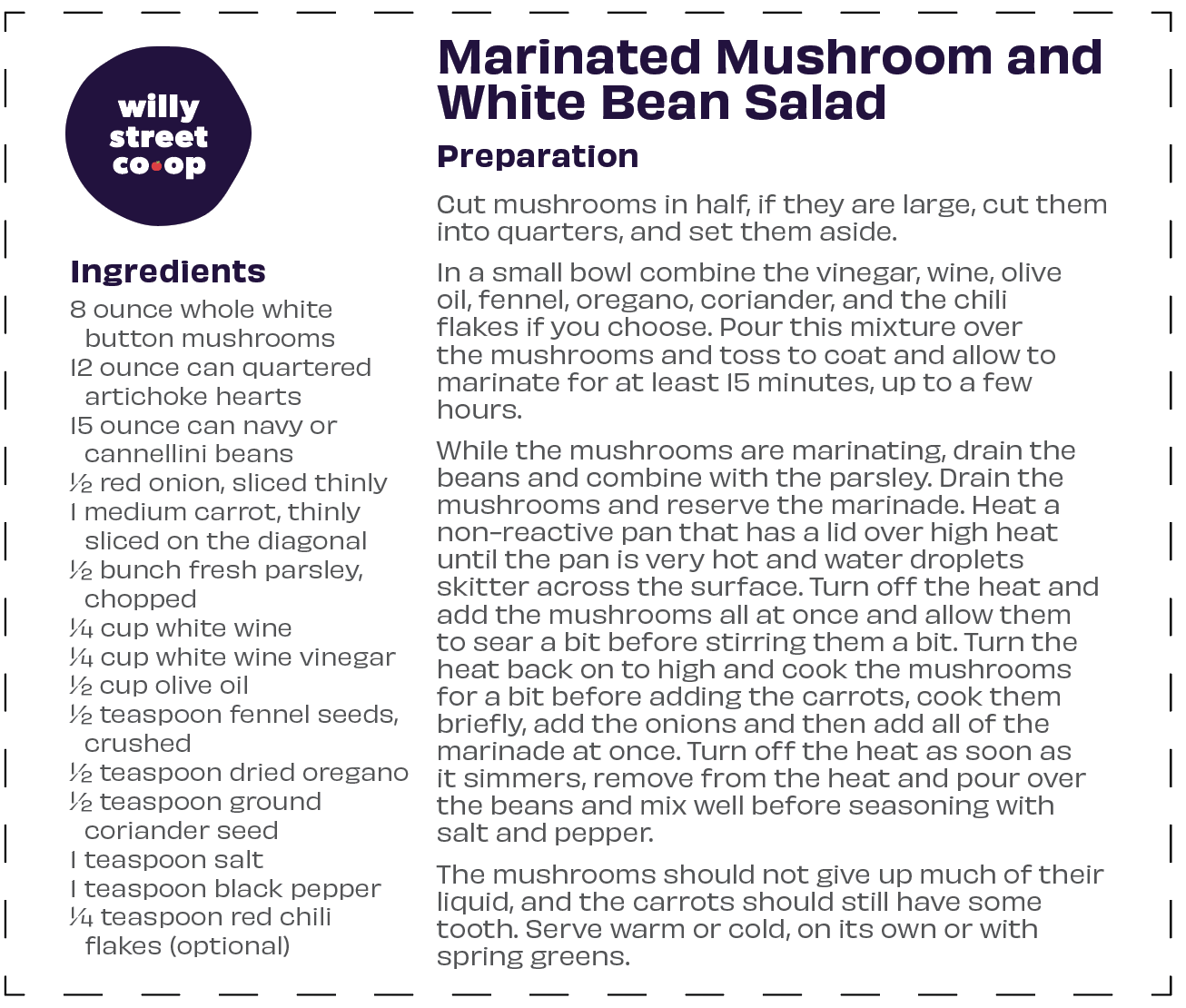
Below are a couple of the Co-op’s popular recipes—all free of the top nine allergens!