 By: Noah Bloedorn, Executive Director at REAP Food Group
& Allison Pfaff Harris, Farm to School Director at REAP Food Group
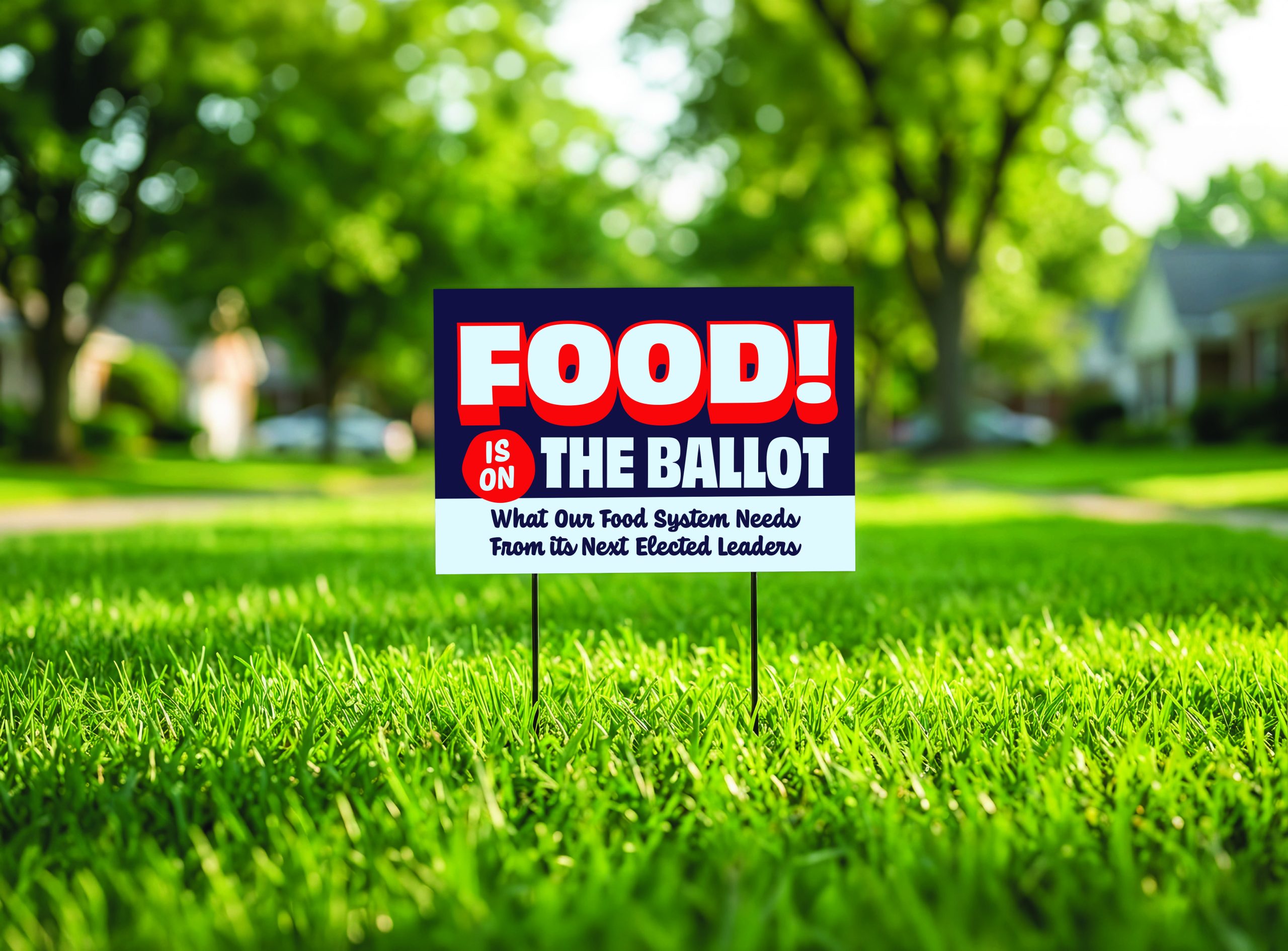
As a Willy Street Co-op Owner, we know you care about food, and about the people who grow, harvest, transport, prepare, and sell it. Every meal is connected to a much larger system, and as we enter election season, there is a lot on the ballot related to food and agriculture. We hope this article gives you food for thought as you research these issues, engage with candidates, and consider how policy choices shape our food system, food access, and community well-being.
And who are we? We’re REAP Food Group, a Madison-based nonprofit working to cultivate connections with communities to build a resilient local food system. We were founded more than 25 years ago as Research, Education, Action, and Policy on Food Group; those four pillars remain central to how we support farmers, schools, businesses, and communities across Wisconsin. When asked about why we do our work, the answer is simple: our food system is broken. How is it that in one of the richest agricultural states in the country and in the world, we have such great disparities in food access, land access, and access to the wealth that is generated from our food system? REAP is on the ground, working across the supply chain to build a resilient, just local food system.
Our current food system holds both tremendous opportunity and significant challenges: disparities in food access, the undervaluing of farm laborers, strain on our ecosystems, and uneven health outcomes for our neighbors. It shows up in who profits from the system and the limited choices left for the rest of us. At the same time, we know the power of local food to create change. Every dollar invested locally supports farmers, workers, and businesses, and helps build a food system that values the people who produce our food, the land that sustains us, and the prosperity of our region.
One of REAP’s flagship initiatives over the past two years has been the Dane County Food System Action Plan, a community-centered initiative to develop a comprehensive regional blueprint for a more equitable, healthy, vibrant, resilient, sustainable, and collaborative local food system. It’s intended for elected officials, local government staff, nonprofits, educational institutions, food businesses, and everyday residents alike, serving as both a policy tool and an educational resource.
Creating a more equitable, resilient food system requires leadership from elected officials who can help shape the policies that influence how food is grown, distributed, accessed, and valued. We encourage readers to reflect on these findings and ask candidates where they stand on these issues and what actions they would take if elected.
Three Tensions Defining Our Food System
Dane County has deep agricultural roots and a strong culture of local food: home to the nation’s largest producer-only farmers’ market, dozens of farm-to-table restaurants, a network of CSAs and community gardens, and of course, Willy Street Co-op, a leader in our community for local and ethical sourcing. Yet, alongside these assets, our analysis of community input surfaced three core tensions that describe the structural challenges our food system faces, and the choices our elected leaders will help decide in the years ahead.
Agricultural Abundance vs. Rising Food Insecurity. Dane County’s fertile soil makes significant food production possible, yet much of that land isn’t growing food for the hundreds of thousands of residents in Dane County. These crops are instead fueling our cars, and inefficiently feeding livestock across the globe, all while the wealth from this production is siphoned off to corporate entities that exist outside of our community. Meanwhile, Dane County is experiencing a rise in food insecurity. Food banks and pantries were designed for short-term crisis response, but low wages, high housing costs, and limited healthcare have turned food insecurity into a chronic condition. Emergency food infrastructure remains under-resourced relative to demand, leaving the county tenuously positioned for the next disruption.
Disconnected Supply and Demand. Dane County residents have an extraordinary appetite for local food, and institutions, hospitals, school districts, and large employers are often best positioned to provide the steady demand that helps regional food systems thrive. Yet many can’t find enough local products and turn to national distributors instead. It’s a frustrating paradox: a county with thousands of acres of farmland, most of it exported to commodity markets, even as institutions and consumers actively seek out more local food.
Community Control vs. Consolidation. Large financial entities and commodity operations are absorbing farmland that once supported diverse, small-scale production, while multi-state processors and distributors crowd out the mid-scale retail options local producers depend on. With each round of consolidation, control over pricing, shelf space, and access moves further from our community. Investing in locally owned infrastructure and businesses is how our community keeps these decisions closer to home.
These tensions aren’t just abstractions. They show up in specific, well-documented trends:
- Rising food insecurity. Over 10% of Dane County residents, more than 58,000 people, struggle to access consistent nutrition, and 42% of that population earns too much to qualify for SNAP. U.S. food prices have risen roughly 28% since 2021, and pantry demand has reached record levels while pandemic-era programs and investments have declined.
- Consolidation. Since we began the food plan project, major local and regional retailers—including Metcalfe’s, Festival Foods, and Fresh Market—have been acquired by national corporations. Similarly, Wisconsin has lost 26.4% of its farms over the past 25 years. Large distributors and chains increasingly dictate shelf space, pricing, and sourcing, sidelining local producers.
- Lack of emergency preparedness. The COVID-19 pandemic exposed real vulnerabilities in regional supply chains. Many emergency food providers still lack the refrigeration, staffing, and coordination needed for sustained crises, and gleaning networks have grown unstable just as government funding is being cut. With the population projected to grow 25-50% over the next 25-30 years, the strain will only increase.
- Large amounts of waste. In 2020, Wisconsin sent roughly 615,500 tons of food and 238,500 tons of food scraps to landfills, the largest single component of Dane County’s landfill, while recovery and composting programs remain far short of meeting demand.
- Large disparities in access. A retail gap leaves fresh produce geographically out of reach in both low-income neighborhoods and rural Dane County. Black and Hispanic households face food insecurity at significantly higher rates than state and national averages, and over 99% of Wisconsin farms are owned by white individuals.
- Demand not meeting supply. Despite growing institutional interest from anchors like UW-Madison, UW Health, and Epic Systems, over 95% of Dane County’s agricultural acreage grows commodity corn and soybeans rather than food for people. A “missing middle” gap in processing, cold storage, and distribution keeps small and mid-sized farms from meeting that demand.
 Seven Goals for a Stronger Food System
Drawing from community input and this research, the Dane County Food System Action Plan identified seven interconnected goals to build a more equitable, resilient, and sustainable food system:
Goal 1: Collaboration. Build social infrastructure and relationships across food system partners, government, and community members to foster coordinated action.
Goal 2: Production. Increase local food production, expand land access for diverse producers, support small farm viability, and grow markets for locally grown food for human consumption.
Goal 3: Access. Ensure all residents have access to affordable, healthy, and culturally relevant food through expanded programs, reduced barriers, and investment in under-resourced communities.
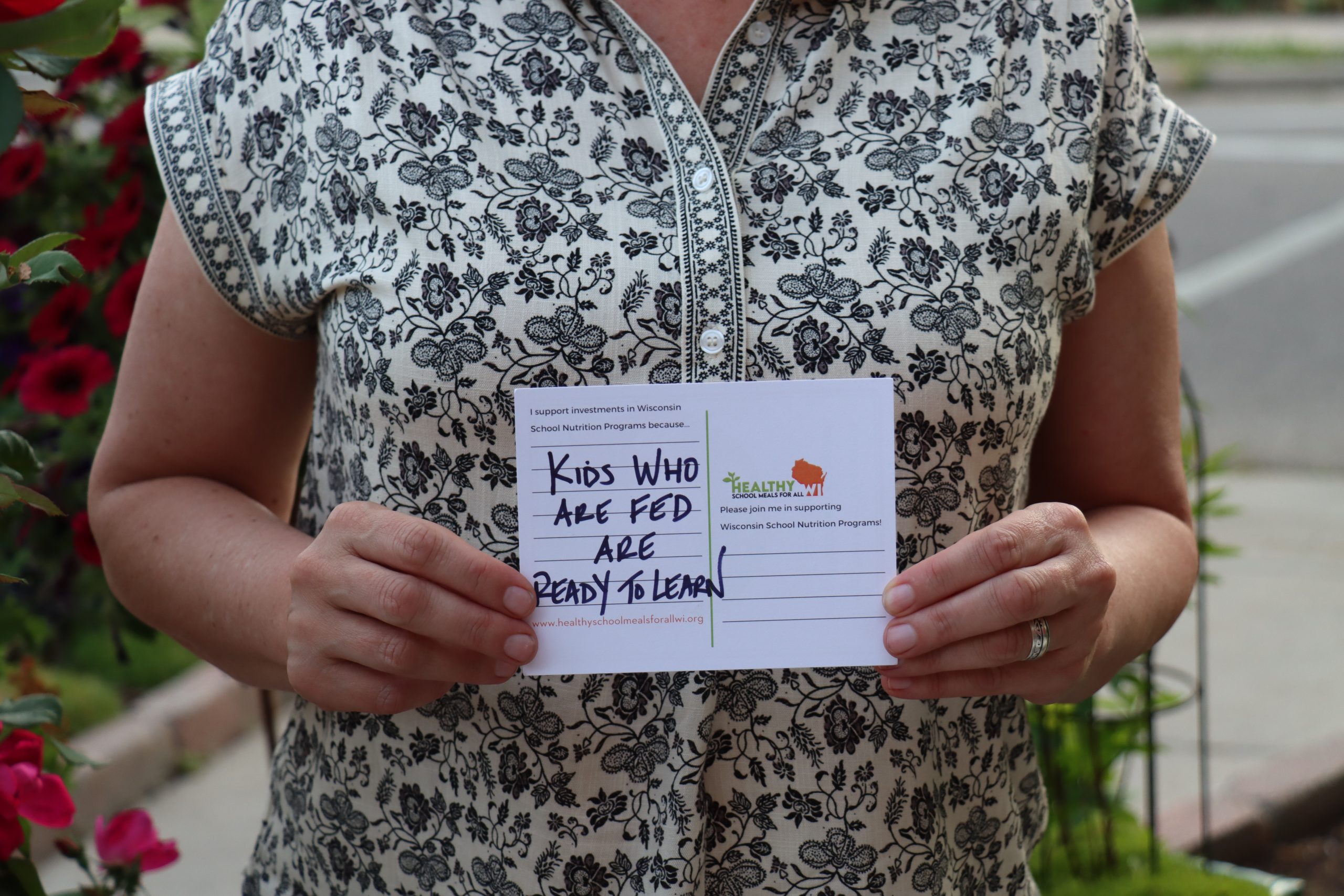
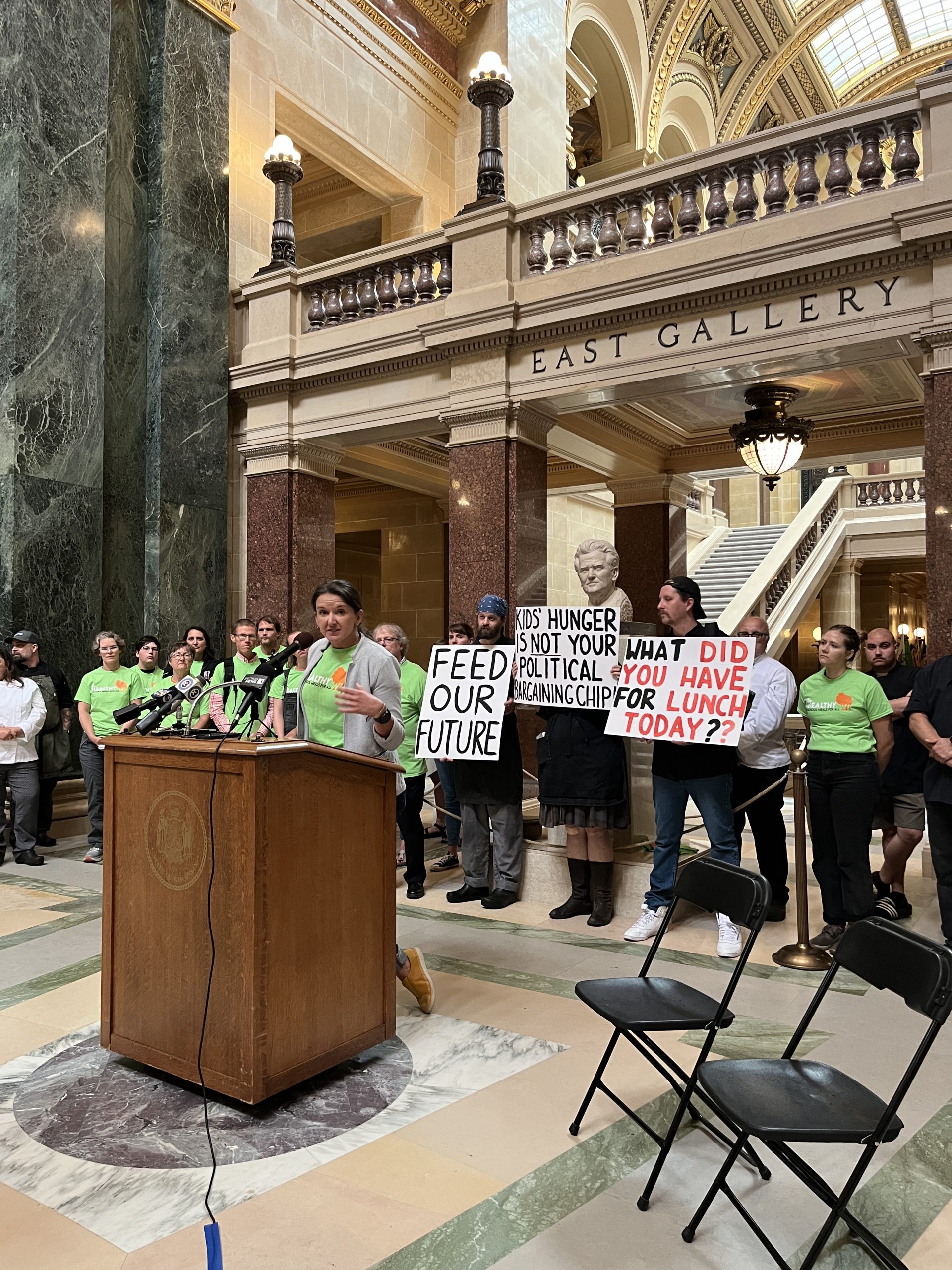
- Call out: REAP Food Group is actively working to improve food access for Wisconsin students through its leadership in Healthy School Meals for All Wisconsin (HSM4A WI), a statewide coalition advocating for free school breakfast and lunch for all Wisconsin K-12 students.
- School meals in Wisconsin currently operate a tiered payment system, free, reduced-price, or full price, determined by household income or qualification for other assistance programs. This creates administrative burdens for schools, can stigmatize students based on family income, and allows meal debt to accumulate when families struggle to pay. In 2023, the School Nutrition Association of Wisconsin estimated over $3 million in school meal debt statewide.
- Reliable access to nutritious meals helps students learn, participate, and reach their full potential. It also strengthens school nutrition programs themselves, since meals are funded through student participation rather than local property taxes: more participation means more revenue for staff, kitchen infrastructure, and high-quality ingredients, including from local farms. When participation declines, so does funding, yet schools must still serve meals, often with fewer staff and greater reliance on processed foods.
- These programs are also a valuable market for Wisconsin farmers and food businesses. Schools have shown strong interest in purchasing local food, as demonstrated by the now-defunded Local Food for Schools program, but tight budgets often limit their ability to source local products consistently.
- For families, the impact is significant: HSM4A WI is estimated to save a family up to $1,000 per student each year, money that can instead go toward housing, utilities, transportation, and healthcare, meaningful relief during a time of rising costs.
Goal 4: Infrastructure. Expand regional capacity for storage, processing, and distribution, prioritizing shared-use and “middle-of-the-chain” facilities that connect local producers to institutional markets.
Goal 5: Efficiency. Reduce and divert food waste through stronger recovery networks, expanded composting, business-to-business tools, and investment in the upcoming Sustainability Campus.
Goal 6: Resilience. Strengthen the food system’s ability to withstand and recover from supply chain disruptions, natural disasters, and long-term population growth through proactive planning.
Goal 7: Prosperity. Create sustainable, well-compensated food system careers by reducing barriers to entrepreneurship, improving labor conditions, and building wealth for workers and small business owners.
 What This Means for You This Election Season
While it’s easy to feel overwhelmed by these challenges, many organizations are already working to address them. But federal funding cuts over the past two years have reduced nonprofits’ capacity to sustain this work, and ongoing investment from elected officials is critical to strengthening food access and security for all.
As you research candidates, ask where they stand: How would they support emergency food infrastructure ahead of the next crisis? What would they do to build regional infrastructure and support local food production? How would they protect community control of our food system against continued corporate consolidation? And would they support Healthy School Meals for All Wisconsin, ensuring every student has reliable access to breakfast and lunch, regardless of family income?
Our food system reflects the choices we make together, as shoppers, neighbors, and voters. We hope this article helps you head into the polls a little better informed, and a little more ready to ask the questions that matter.
Learn more:
- Healthy School Meals for All Wisconsin (HSM4A WI) https://www.healthyschoolmealsforallwi.org/
- In 2023, the School Nutrition Association of Wisconsin estimated over $3 million in school meal debt statewide https://drive.google.com/file/d/1UOVn8tSR8wCliTSuuABQgU-ClgnwX-sL/view
- Sustainability Campus https://landfill.danecounty.gov/projects/WastandRenewableProjects/Sustainability-Campus