 by: Andy Gricevich
How we upper Midwesterners love our summer getaways—visiting new and distant places, or returning to beloved destinations. This year might be the time to plan our travels for places close to home. With the global situation pushing fuel prices to record highs, filling the tank can crank up the cost of a trip to prohibitive degrees. Fortunately, Wisconsin offers plenty of possibilities for great day trips or overnight stays.
Our Wisconsin isn’t just all about Bratfests and state fairs. There are trail hikes along the river in Eau Claire, Indigenous arts events in Oshkosh and nearby Door County, free outdoor concerts in Menomonie, traditional arts and skills classes offered in the Driftless, and countless events highlighting the diversity of our state: Milwaukee’s Black Arts Festival (and many celebrations of the food traditions of various ethnicities), Pride in July and the Juneteenth Festival in La Crosse. Of course, the southern half of Wisconsin also offers endless camping opportunities, and plenty of beautiful rural roads for short drives in the countryside.
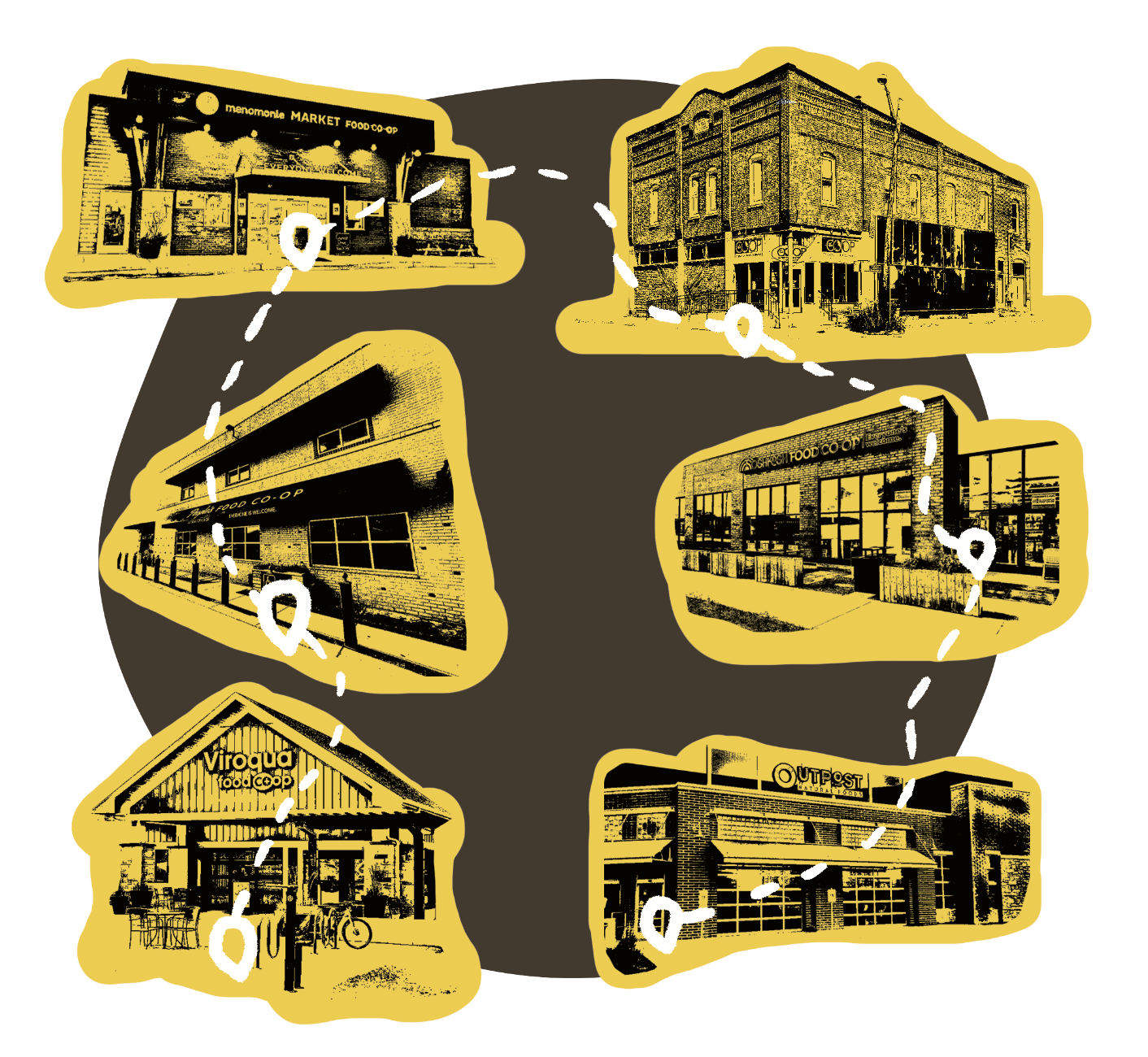
It’s our rural areas that have given us one of the things that makes Wisconsin particularly special: our regional foodsheds. The state has seen a renaissance of small-scale, sustainable food production, and artisanal culinary invention. One way to get a taste of this vibrant local food world is to visit any of our many grocery cooperatives—places that bring a regional variety together under one roof. Why not make at least one co-op a destination on your next trip, for a snapshot of a given area and a spot to grab a meal or some road food, or crafts and unique goodies to bring home? Here’s a brief look at just a handful of the co-ops one might visit along your routes to and from home this summer.
VIROQUA FOOD CO-OP
The stunning topography of southwestern Wisconsin, with its many villages tucked among constantly shifting hills and valleys, has for a long while now seen a flourishing of small-scale farms, a dedication to care for the land, a strong community ethic, and the production of an amazing variety of delicious food. Organic vegetables, dairy, herbs and grains, maple syrup and honey, regeneratively-raised meat, local fruit, and much more seem to spill forth from every nook and cranny of the region.
This abundance supports a thriving culture of artisanal food production; just about anything one can imagine is being made in the Driftless. A condensed taste of this local food scene can be found in the little town of Viroqua and the area surrounding it, with its regionally-focused restaurants, small shops, cafes, pop-up food events, and farmers’ market. One institution that’s helped earn the town the moniker “unofficial capital of the Driftless” is the Viroqua Food Co-op.
The co-op, while having grown a lot since its founding in 1995, has retained an atmosphere of the small and the local. It’s a hub for little communities built around a regional commitment to chemical-free food, restorative agriculture, and sustainable living. There you’ll see area farmers meeting for coffee while locals and visitors enjoy great sandwiches and food from one of the best hot bars around at Viroqua Food Co-op ’s deli. The co-op’s bulletin board alone is a great source of information about what’s going on in the Driftless, from land sales and farm equipment to wellness offerings, local music festivals, and rural organizing efforts.
The store’s shelves feature all sorts of amazing things sourced from small-scale producers: unusual fruits and vegetables, herbal medicinals, artisanal meats, cheeses, beer and wines, bulk grains and flours, and so much more—many products you’ll find almost nowhere else. The co-op’s dedication to local foods and crafts is complemented by a strong overall ecological mission. The building itself has been designed with sustainability in mind, generating much of its electricity from solar panels and using the heat from refrigerators and freezers for its hot water, while coordinating donations of food scraps to farmers for compost and livestock feed. Viroqua Food Co-op foregrounds economic equitability and diversity, with its focus on Fair Trade and Inclusive Trade, and its support of local farmers and producers through no-interest microloans. All in all, the Viroqua Food Co-op stands as an emblematic institution in a special part of the Upper Midwest.
PEOPLE’S FOOD CO-OP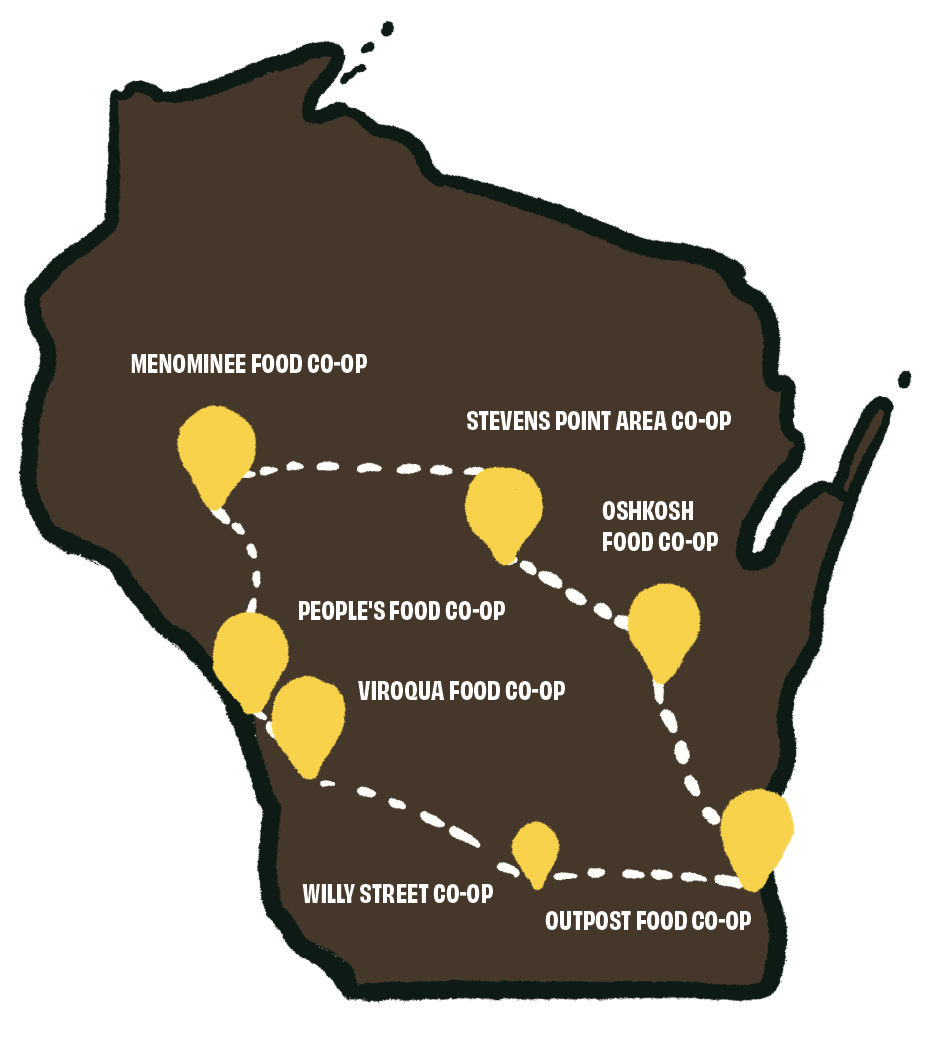
Heading northwest we arrive at La Crosse, tucked among the bluffs overlooking the Mississippi River. La Crosse enjoys a thriving local food culture that links the city with nearby communities across the water in Minnesota and the countryside around them—a Driftless foodshed as singular as the one embracing Viroqua. That food network finds emblematic representation on both sides of the river in the form of People’s Food Co-op.
People’s started as a buying club in the 1970s, founded by folks who, seeking independence from the industrial food system, wanted access to chemical-free, unprocessed bulk food. The 1980s saw a movement toward cooperative membership structures and a period of energetic growth, eventually leading to the establishment of the co-op’s downtown La Crosse location and, in 2012, its merger with the Good Food Store, another co-op in Rochester, MN. Today People’s is one of the most prominent institutions of the region’s cooperative grocery movement. At both People’s locations, you’ll find plenty of products from food-makers based throughout the unique region. Late summer may see the earliest heirloom apples, unusual stone fruit, and rare berries from local orchardists. Small family farms offer organic produce and grass-fed and pastured meat and dairy. Artisanal cheeses, live-cultured vegetables, and locally-made ethnic foods find space on the stores’ shelves. Especially apparent in the People’s selection is the prominence of younger farmers doing a lot with little acreage throughout the area.
The co-op features a popular deli with breakfast and lunch options, sushi and specials. In 2023, the La Crosse store bought Fayze’s Bakery (which was on the verge of closure), and now offers its artisanal sourdoughs to happy customers. Its community room hosts film showings, workshops, and tastings. Its newsletter gives an often in-depth view of the food networks in which the co-op is enmeshed; the picture it presents is of a cooperative that retains its roots in the desires of its community.
MENOMONIE MARKET FOOD CO-OP
If you’re headed Northwest, it’s well worth making a stop at the Menomonie Market, with its two stores in the rivertowns of Eau Claire and Menomonie. The Market was founded in 1974 as a buying club (in a choir loft!) by a group of Menomonie residents. Growing demand for minimally processed, sustainable food eventually led to the opening of the full-sized main store in
2015. In 2023, Eau Claire’s Just Local Co-op joined with Menomonie and expanded to open the Co-op’s second location—a collaborative response to the challenges of the Covid-19 pandemic, and a testament to the devotion of the local community.
A few years ago, General Manager Crystal Halvorson, commenting on the growth of the Market, pointed to “what has stayed the same: a diverse group of people sharing a love for good food, an alternative to an exploitative economy, and support for what makes rural Wisconsin special.” The co-op works to revitalize the rural food economy through projects like its Fund Our Foodshare Program, which awards grants to local farmers, producers, and suppliers for equipment, processing, and general sustainability. Both stores host an annual multi-course dinner with ingredients sourced exclusively from current and past recipients, featuring awareness-raising presentations by local producers. The Market is the only grocery option in downtown Eau Claire, and the co-op in general maintains a dedication to community food access and economic well-being alongside its uncompromising product selection standards. It works to fund organizations ranging from the local chapter of the Wisconsin Farmers Union to groups targeting homelessness and housing shortages. Small Midwestern cities and surrounding rural communities like these truly benefit from institutions like Menomonie Market.
STEVENS POINT AREA CO-OP
A trip “up North,” may well take you through the Wisconsin River (and university) town of Stevens Point, where you’ll find another great co-op. The store’s image conveys a sense of strong 1970s roots, as well as a commitment to democratic communal decision-making about how the Stevens Point Area Co-op works. It’s beloved by the community for its high-quality organic produce offerings and focus on local and sustainable products of all kinds. The Co-op’s approach is refreshingly old-fashioned in its politics and unusual in the simplicity of its online presentation. The SPAC website features a set of basic spreadsheets, updated weekly, listing every product available in every department by type, brand, and price. That’s an unusual degree of transparency and accessibility for any store. The Co-op has a solid history of analyzing the products it offers in order to minimize controversial additives and ingredients. It’s long been invested in the local economy, and has been praised by current and former employees for the high degree of respect for staff input on how the store is run. It’s great to see a grocery store with such a balanced dedication to quality, equity, and the broad desires of the members of its community.
 OSHKOSH FOOD CO-OP
Northeastern Wisconsin’s first grocery cooperative, the Oshkosh Food Co-op was intentionally founded to fill a gap (a “food desert”) in the community. The co-op describes itself as a full-service store, emphasizing a balanced mix of locally sourced products and affordable staples. Economic accessibility and customer input are central to the co-op’s mission. Oshkosh Food Co-op emphasizes food justice and values of diversity and inclusion. On its website, it particularly acknowledges the role of Black Americans in the founding of the U.S. cooperative movement. The co-op explicitly highlights the role of racial disparity when it comes to food access, and tries to work to address inequity in its policies and public statements. The Co-op works with regional producers to offer healthy food rooted in local economies. It also coordinates customers and producers by offering signups for organic flour deliveries and a Community-Supported Agriculture share from a farm raising livestock with humane and regenerative practices. Its Food For All program offers discounts to keep products affordable while maintaining high quality standards. The Oshkosh Food Co-op stands out in its dedication to the project of building a more just local economy and culture.
OUTPOST FOOD CO-OP
Heading Southeast to Milwaukee, we can continue our tour with a stop at any of the four area locations of the Outpost Food Co-op. Founded on Earth Day in 1970, this veteran cooperative has grown steadily, with ever-more-diverse projects and community involvements arising along the way. Outpost has steadily become a staple of the natural foods world in Wisconsin. The co-op is especially recognized for its award-winning focus on organic produce, and its delis have long been popular destinations for a quick, healthy, delicious meal. More recently, Outpost has been expanding its prepared food production to supply local hospitals and clinics, and is in the process of building a new independent kitchen to keep such collaborations growing.
The co-op foregrounds community engagement, raising money for food banks (largely through shopper donations) to address food insecurity. It puts on affordable dinners featuring music and encouraging connection among attendees, and hosts pop-ups by small-scale food producers and chefs. In its “Community Creatives” makers’ markets, local vendors, musicians, and poets set up in the store aisles for a unique and multifaceted event. Marketing director Diana Schmidt points to the overall energy of the co-op. “I’ve been here 25 years in every department because it’s a whole different vibe and I love it so much,” says Schmidt. “Pardon my French, but it’s the friggin’ best to be part of a grocery store OWNED by the community… Annnnd one more thing—we have the best carrot cake in all the land.” Stop in for a taste of that cake and the Outpost spirit!
COOPERATIVE CONNECTIONS
Wherever your travels take you in Wisconsin, co-ops are places of connection. Each store is a gathering ground for its own local foodshed and its own local folks. At the same time, what they all share is a dedication to the model of cooperative ownership of our food distribution system and a fostering of economic and cultural empowerment. The principle of cooperation among cooperatives is almost a symbol of the connection between distant and unique communities. It’s a network built on the idea that food can bring us together across all kinds of lines. When you get what you eat from a co-op on your travels, you’re enjoying a taste of unity in diversity—a picture of a broad living culture that helps make our part of the country the great place that it is.