by Megan Minnick
October is a busy month. It’s both Fair Trade Month and Co-op Month—two of the central themes in Willy Street Co-op’s vision of a sustainable, accessible, and equitable food system. Both movements are near and dear to us, but there’s only so much time in the day and so many pages in the Reader… It can be a real challenge to decide which to focus on.
But what if they weren’t in competition? What if, rather than choosing between the Fair Trade and cooperative movements, we instead celebrate them both and the synergy between them? What does that synergy look like?
It was with these questions in mind that I sat down to interview Gerardo Goicochea.
Gerardo is a Fair Trade coffee farmer from the village of Santa Rosa in Jaén Province in the mountains of northeast Peru. He’s also a founding member of the Sol y Café Farmer’s Cooperative, a key supplier of our longstanding coffee partner, Equal Exchange. Sol y Café’s coffee is a regular component in two of our top-selling coffee blends: Organic Love Buzz and Organic Breakfast Blend.
I spoke with Gerardo over a video chat and through an interpreter. While I’ve tried to keep his original thoughts and voice as intact as possible, what follows has been edited for clarity.
Megan: How did you come to be a coffee farmer? Did you grow up on a farm?
Gerardo: I know coffee because of my father. He first came to Santa Rosa in the 1960s, when he was in the army. He saw that the soil was good for growing coffee, and came back here to have his family. I’m the third child.
My father didn’t know how to read or write. He signed papers just using his name. He told me and my siblings that he did not have the resources to educate us, but he could teach us to work. Back then, there wasn’t any other option than working.
After I finished primary school, I decided to plant my own coffee crop. I started when I was 13.
Megan: And you continued until now?
Gerardo: More or less, though 2003 marked a turning point.
Over the years, my family had accrued a debt of 3,000 sols [around $900 USD], which we owed to a man who lent money to families like ours. In 2003 the time came to pay. The common method of payment was in coffee, and the man had written in his notebook that we owed him 30 quintales of beans [3,600lbs]. But that was much more than 3,000 sols worth. He was taking advantage.
It wasn’t fair. I had my own family by then, and the money from the crop paid for our food for the year. But we had no choice. We had to pay. It was very difficult, and I spent all my time growing coffee. For me, it was the breaking point. That was before the cooperative.
Megan: How did the cooperative come into being?
Gerardo: It started back in 1997, when Cáritas [a Catholic organization dedicated to empowering vulnerable populations] arrived and started a program funded by USAID to help farmers learn new growing techniques in coffee, rice, and cocoa.
I was identified for my leadership and selected to be part of the committee created by the project. I became involved in workshops on coffee growing. I was excited by what I was learning, and my family agreed to give our land over to me to implement the new techniques.
In 2005, after surviving that difficult year when we settled our debts, I decided to travel to Jaén [the capital city of Jaén Province and an important coffeetrading hub] to sell my crop, rather than selling to the local traders. No one from Santa Rosa had ever done this, but I’d heard that in the city, buyers were paying three times what we were getting in the village.
The trip took two days. I brought my wife and baby son (who’s now a university student!) with me, because it was a risk, and we didn’t want to get separated. But it was worth it. In that year, we won because we were able to sell at a much higher price. I also met buyers and experts in the coffee trade who would eventually become important to the business of the cooperative.
In Jaén, I saw firsthand how my coffee was mixed with other producers and sold as a commodity. That made me sad, because my coffee was much higher quality than the others.
I realized then that we needed a better way.
After that, the Cáritas project ended. We had been very successful, and we continued with that success. While many farmers in the area were getting 14-15 quintales [1,680-1,800lbs] of coffee per hectare, we had farms in the program that got up to 23 quintales [2,760lbs].
What to do with all that coffee became a problem. We needed buyers who valued the high quality of our bean, and we needed an efficient way to get it to market. The cooperative came out of this need.
At first, we debated if we should become a cooperative or an association, and in 2008 we decided on a cooperative—Sol y Café. I was called to become part of the board, and ultimately elected president.
At the beginning, I worked as a technician for the co-op, helping other farmers with their growing techniques. This position paid a salary, and in this way I was able to make money so my siblings could study and pursue livelihoods of their own.
Megan: How many members does the co-op have?
Gerardo: We started with 950. We now have 1,091.
Megan: What difference has the co-op made to your family—and the other members’ families—compared to the way it was before 2008?
Gerardo: The difference is in both the social and business aspects of the cooperative. We are family, and we work as a team. If we have an objective or goal we all pull in that direction.
It’s created a safe place for our farmers. We’re not alone anymore, and we don’t need to look for opportunities elsewhere, which can represent a danger—as our experience with the debt collector showed.
We trust in each other, that no one will take advantage of us, and we feel safe.
It’s not something to be taken for granted. I’ve found that I need to remind members of these values and benefits all the time in the cooperative meetings. Especially now, when coffee prices are very high, it can be tempting for members to look outside the co-op for short-term gain. But we need to think in the longer term, and in that, we’re much better together in the cooperative.
Megan: Sol y Café became Fairtrade Certified in 2010. How has that affected your livelihood?
Gerardo: The Fair Trade premiums have contributed greatly to the management and development of the cooperative. Honestly, without them we wouldn’t be talking right now. I consider myself a result of Fair Trade.
Megan: What sorts of things have been made possible by the Fair Trade premiums?
Gerardo: We decide together how to use the premium money. Some of it goes into the co-op’s financial reserves, and some toward technical support so we can continue growing high-quality coffee in the face of climate change and other challenges.
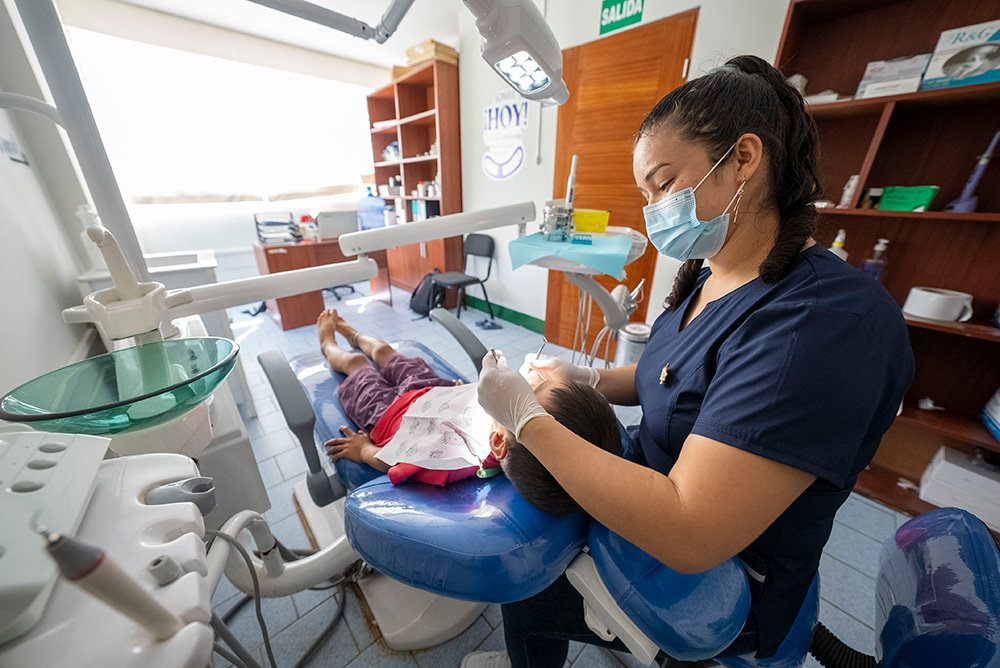
We realized that if we want to have good results and production, we need healthy members, so we used premium money to fund a health center and preventative health program. No one wants to lose a family member, and now we have a means to identify illnesses and save lives.
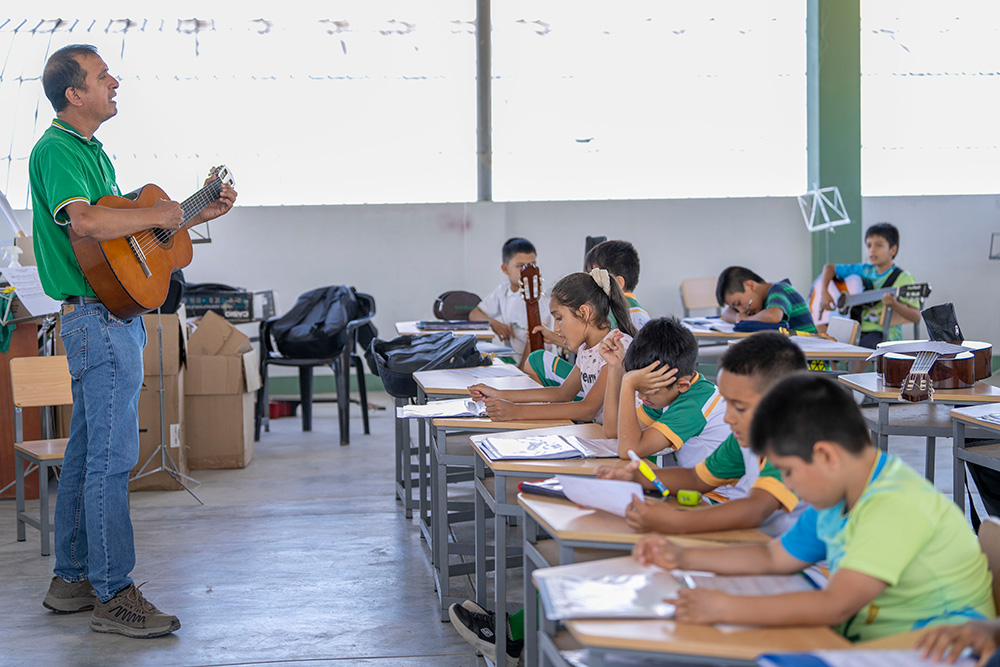
We’ve also funded a school—the only co-op school in the country. In fact, just earlier today, I went there to view the children’s science experiments.
Megan: What is your farm like now? How many people do you currently support?
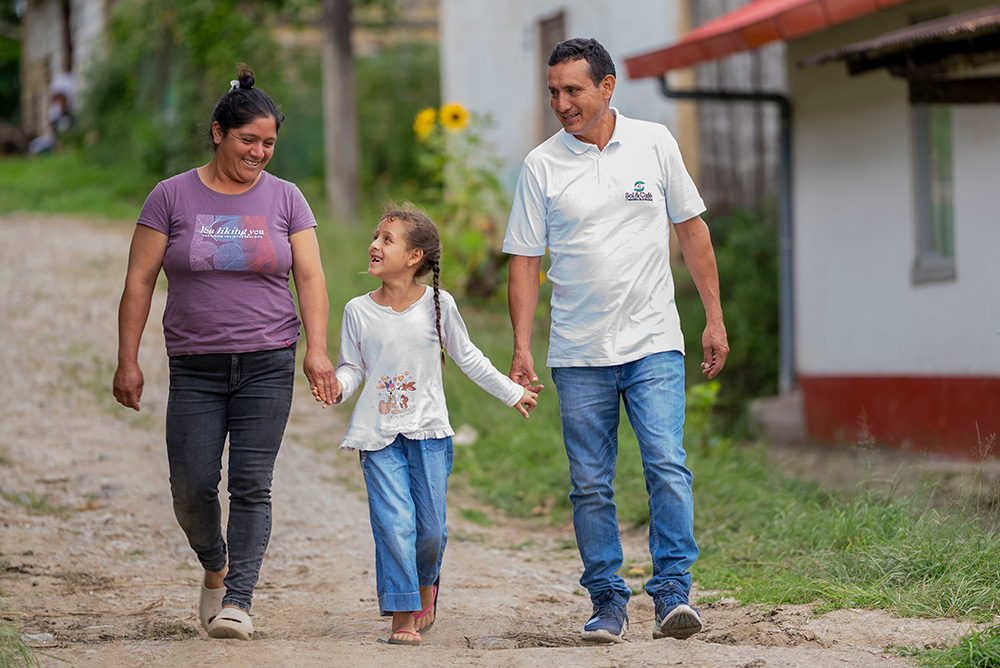
Gerardo: There are four of us here—my wife, daughter, and my mom. My son is at university in Jaén. My sister is a professional who works for the government, and one of my brothers works with orchids.
We have fourteen hectares which we work together as a family. Some is in coffee, some is in conservation, which is very important to me. I gave my last salary from my paid work with the cooperate to my mom, and she bought cows.
I also own five hectares myself, three of which are in coffee.
My father died 8 years ago, and I’m very proud to have the family together like this.
Megan: Is there something you wish that the people who drink you coffee in the United States knew about you or the coffee you grow? If you could speak to them, what would you say?
Gerardo: I would ask them to drink the coffee with responsibility, solidarity, sustainability, and trust. I’d like them to not only remember me, the coffee farmer, but to think of the next generation.
I would also tell them that if they want to visit, they’re always welcome to come and see my farm!
So there you have it. Gerardo’s story is unique of course, but it’s a beautiful illustration of what can happen when the cooperative movement and the Fair Trade movement combine. The cooperative provides the structure—the foundation and connection between farmers—which is then nourished by the Fair Trade premiums.
The results are nothing short of transformational as farmers like Gerardo are empowered to disrupt the cycle of generational poverty and create a new future for their families and communities.
Kids are able to go to school. Life-saving healthcare becomes accessible.
Farmers are able to think in the long term—about creating a sustainable agricultural system that future generations can inherit—rather than just short-term survival.
I was particularly struck by Gerardo’s statement that members feel “safe” within the co-op, and how they were no longer alone.
In the face of so much uncertainty, with climate change and a wildly fluctuating global coffee market, this safety and solidarity means everything—for Gerardo, for his family, his community, and for all of us who connect with him through the coffee he grows.
The next time you brew your cooperatively grown Fair Trade coffee or tea, or break into a delicious Fair Trade chocolate bar, be sure to think of Gerardo, and do it with responsibility, solidarity, sustainability and trust.
Many thanks to Equal Exchange for facilitating this conversation. While the exact makeup of Equal Exchange’s coffee blends changes with each harvest and season, Sol y Café’s coffee may be found in their Organic Peru Medium Roast, Organic Breakfast Blend (both the original and Dark Roasts), Organic Love Buzz, Organic Espresso, and the Organic Peru Light Roast that is part of the new Co-op Origins Series 12oz product line.
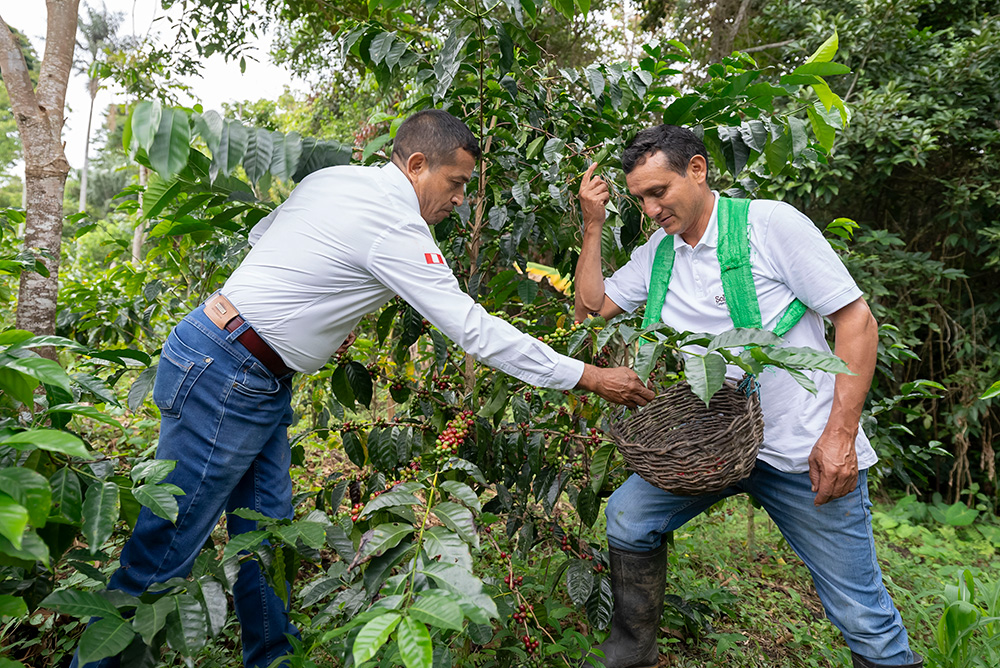
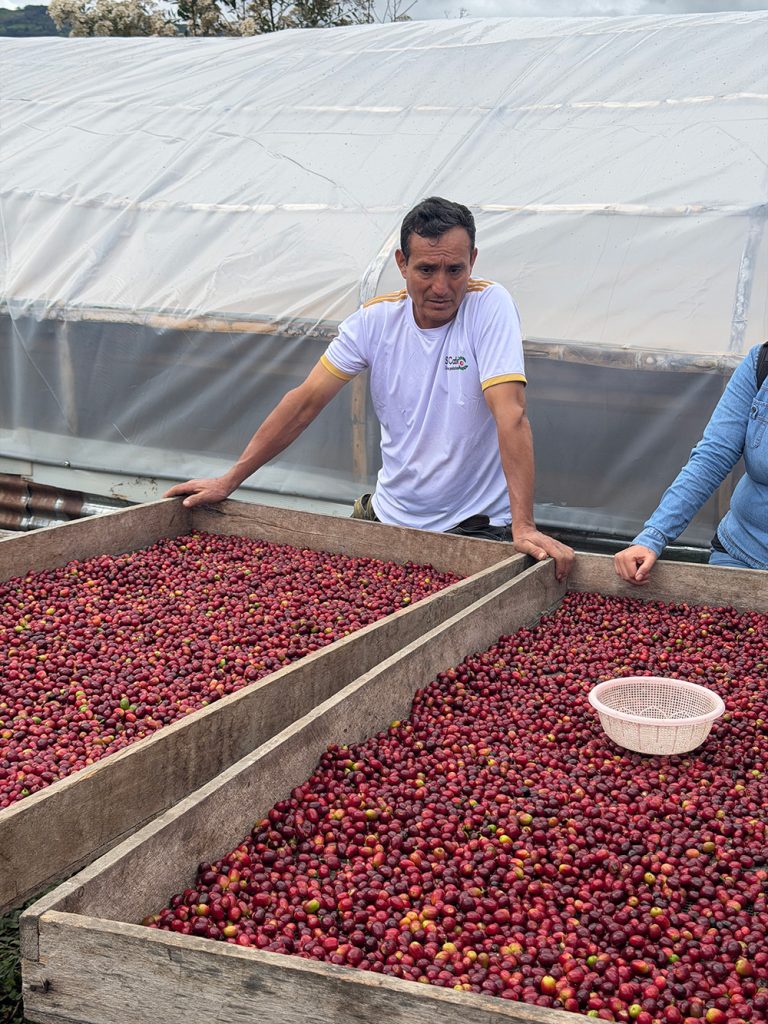
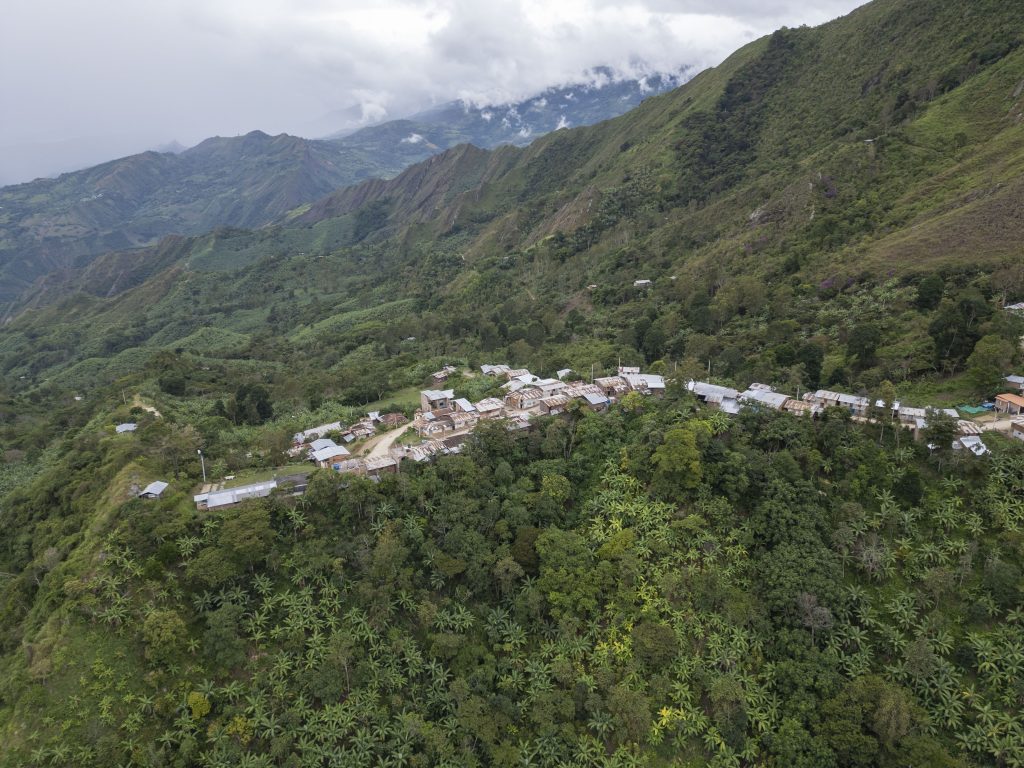
Photos courtesy of Equal Excahnge. Photos from top left going clockwise: Gerardo Alarcón, General Manager of Sol y Café, and coffee farmer Gerardo Goicochea work side by side in the field; Students engage in a full curriculum, including music, at the only co-op school in Peru. Sol y Café invests in music and dance as a way for children to experience cooperation from an early age, learning to work together through the arts; Gerardo with his wife Margarita and daughter Sol.; One of Sol y Cafe’s remote farmer neighborhoods; Gerardo’s freshly-harvested coffee ready for sorting; Coffee cherries, freshly-harvested, ready to sort for quality.